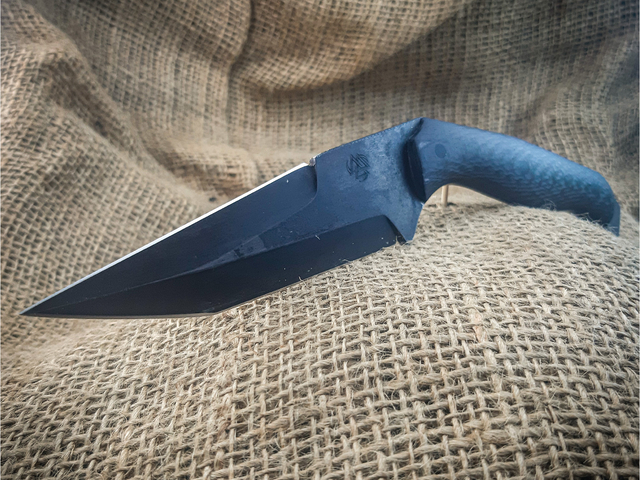
It is very harmful that we use a term "combat knife" in a vacuum without adding any more information connecting it to a particular combat system. let me show you what I mean.
Type in combat knife into Google select images and look at the result results for a while. Do it right now and come back to me.
Done?
Great!
Now - tell me how many distinctive designs you saw scrolling through that? 10? 15? Straight edges, curved edges, tantos, karambits, daggers…
So many unique designs - created for a single purpose.
Now do the same but type in "bushcraft knife" and tell me how many different designs you saw because I bet it will be like two, and I will argue that they were pretty much the same. They were just sized differently.
This is a huge problem that combat knives have when it comes to being understood by a general public, and This is why many different people constantly argue what works and what doesn't in combat knife design.
When you say combat knife it is like saying kitchen knife. Chefs know that in a kitchen you have many different tasks that require specialized tools. There is a special knife for peeling, carving. You have a different knife for fish, a different one for meat, and a special cleaver for bones.
Just like in the kitchen knives have very many different tasks and materials that they cut end every knife is designed to work with a specific material and specific type of cutting, combat knives are created to be good for specific techniques and specific situations.
There is a plentitude of martial arts and weapon combatives and of course they share a lot of movements simply because they are all designed for humans and our anatomy is same across all cultures and times. We use the same sets of motions that are within range of our possibilities, and we target the same areas but what we do with those set rules will determine what type of tool we will pick to be the perfect one for us.
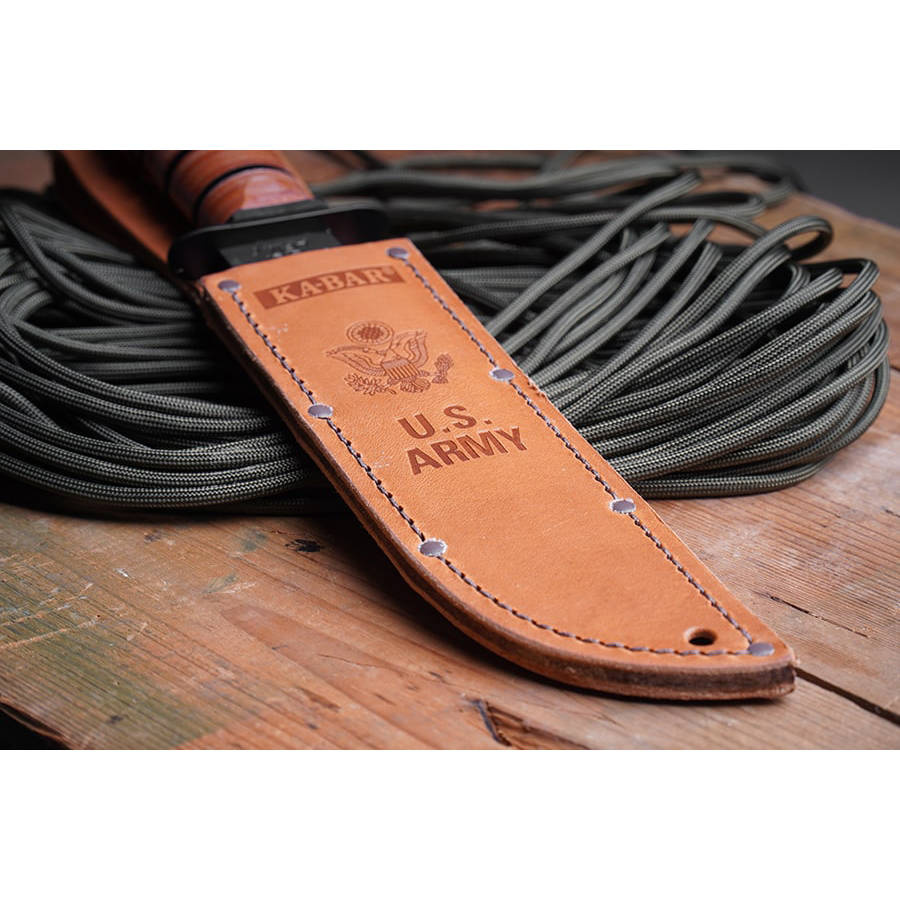
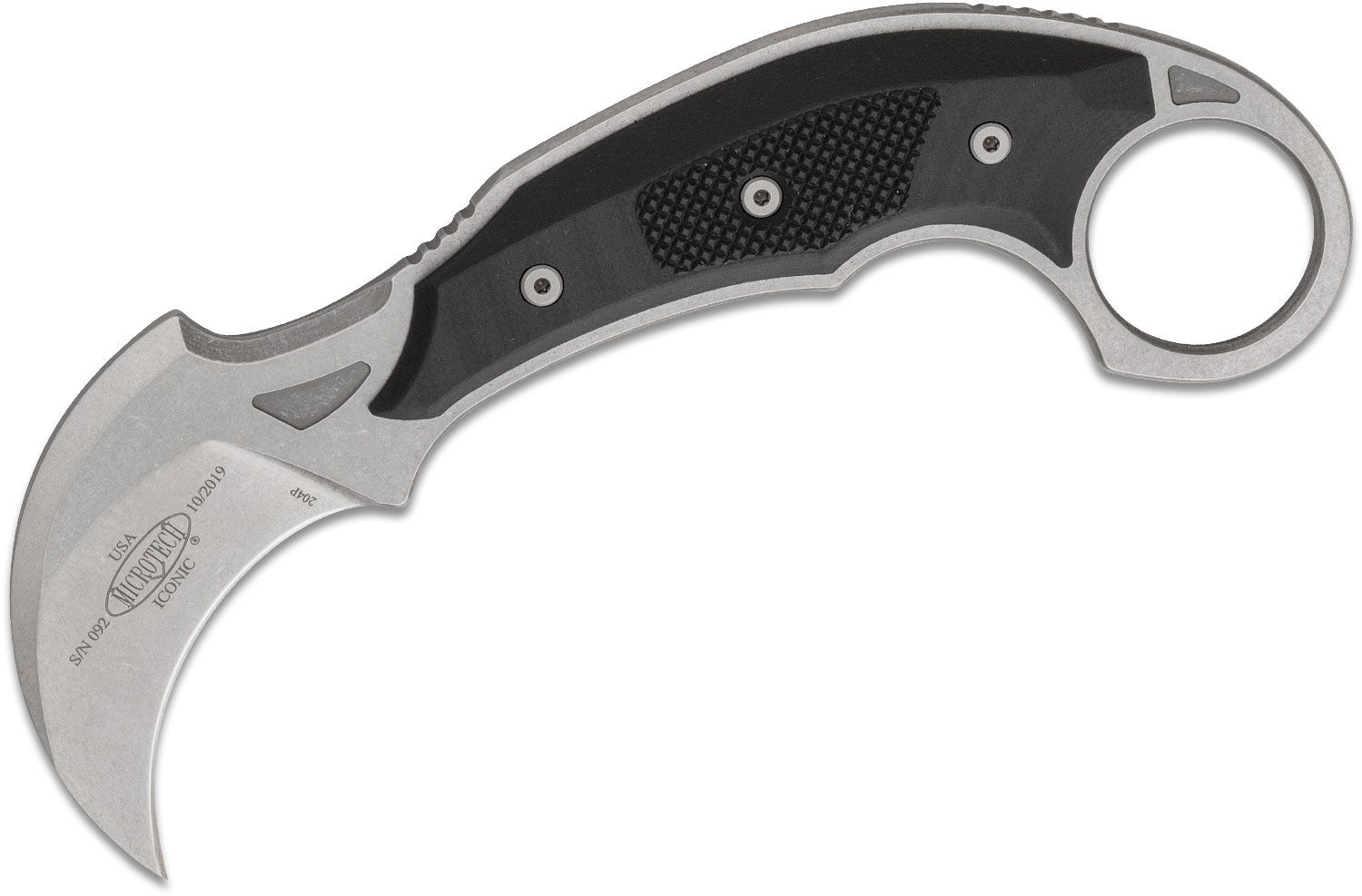
Look at the two pictures below. There are two quite different knives here. One of them is a classic USMC ka-bar and the other is microtech karambit. Those two blades are both excellent combat knives they are both purpose built and have a long history of combatives behind them. Yet they are more different than any two bushcraft knives that you will ever find.
Therefore, when we talk about combat knife designs, we should never talk in absolute design choices instead of that we should consider general rules that are applicable to every combat system and then when those are met, we can go into specifics that are tied to a particular way of using this tool.
I nerd out about combat knife designs for years now and I think that I can pinpoint what the general rules of making a combat knife are. Let me walk you through what I think is the most important here.
1. Knife retention.
The most important thing that can be achieved in many ways is to make sure that the knife that you will be using for combat will stay in your hand. This will go ways beyond the importance of blade geometry, shape, sharpness and any other feature a knife might have.
To be able to fight you must keep your weapon in your hand, if you lose your weapon, you lose an altercation immediately. Therefore, no matter what type of combat knife you will be designing or buying the first thing that you should look out for is a handle that is comfortable to hold. Definitely it's not smooth and if possible has features that will stop your hand from moving too far towards the blade.
Let us go back for a second two our two examples from before. KA-BAR has a handle with a round cross section that has spaced ridges that increase the friction and help the handle stay in one place while you grip the knife. Additionally, there is a cross guard between the blade and the handle that does not allow the blade to slip and cut your fingers. This is a classical design of a tool created to inflict harm. This is how daggers were built through history for a reason.
Now the karambit accomplishes the same goal with a vastly different design choice the one that we are talking about here has no barrier between the handle and the blade and the handle in general is much smaller but in Karambits the ring stabilizes the knife in your hand and locks it from moving in any direction.
Different design choices – one purpose.
2. Easy to carry.
This is very subjective and i want to show you that you also need to think about your design in the light of situations in which it will be carried. As with any tool a combat knife is useless if you do not have it on you when it is needed. KA-BAR is designed to be carried by a soldier. It can be big because there is a dedicated spot for a soldier to carry it on. On the other hand, if you are picking a combat knife that you will be carrying for personal self-defense in the worst situations in your everyday life then probably having something this big hanging from your belt can be problematic. A good combat knife needs a caring system that is easy to access and quick to draw. You must consider where you will be carrying it how it will be carried if it can be concealed easily, and how hard it is for someone else to grab it and use it on you. In today's modern world knives are at best a secondary option when it comes to defending yourself and they are best used in situations when there is no real distance between combatants. Therefore, I prefer small knives that can be easily hidden until the moment when they are needed.
No matter the size – a combat knife has to be easy to carry and quick to draw.
3. Tip geometry
No matter what type of combatives you practice, and what techniques you are using, a knife always is the most dangerous as a stabbing weapon. Especially when we consider that most of us nowadays carry smaller blades then doing debilitating damage with a cut becomes even less probable. Especially when you pick a thicker knife you should look for a slimmer and more streamlined tip, preferably with a swedge to ensure that it can easily pierce thicker fabrics. I will make an entire post on this as there are multiple factors that can change how a tip behaves while stabbing.
Always check if your knife can go cleanly through fabric.
And that is it.
Make sure that the knife stays in your hand by some means.
Be able to have a knife on you when the situation to use it arises.
Make sure that it can go through fabric into soft tissues.
And yes - this describes a sharp screwdriver. There is a reason that i picked this topic to be the first - there is a lot more nuance coming, and i need to get this out of the way. Just remember – there are a ton of combat knife designs. They can be carefully designed to be the perfect drop of distilled death, but in the end – people are soft. Pick something that you like.
Mike

Article comments
Leave a comment